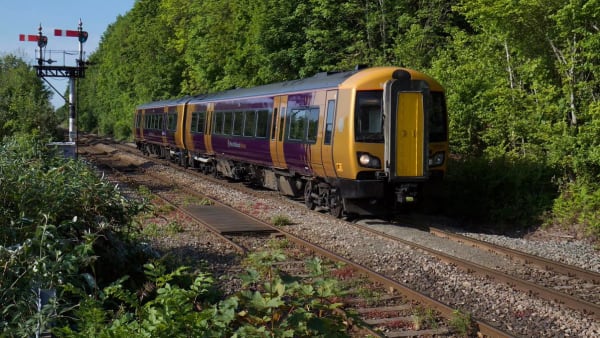
RAIL SERVICES operated by West Midlands Trains are set to be transferred to public ownership this weekend in line with government plans for a simpler and more unified railway, writes Neil Gordon.
The historic change tomorrow (Sunday, February 1), will see West Midlands Railway and London Northwestern initially being taken over by the government-owned DfT Operator Limited until new public-body Great British Railways is fully established.
West Midlands Trains will be the fourth operator to enter public ownership under the government’s Passenger Railway Services (Public Ownership) Act, joining Greater Anglia, C2C and South Western Railway.
More than 8,500 publicly owned rail services are now running daily, helping over 660million passengers get where they need to go each year, and at a time when the government has frozen rail fares for the first time in 30 years.
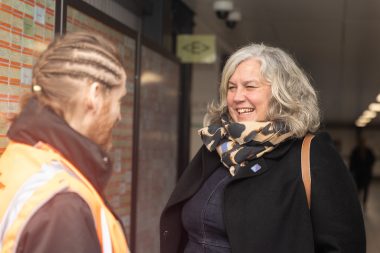
Transport secretary Heidi Alexander, said: “From Sunday, the thousands of passengers who travel with West Midlands Railway and London Northwestern will be using services that are owned by the public and run with their interests at heart.
“We’re working hard to reform a fragmented system and deliver a reliable railway that regenerates communities, rebuilds the trust of its passengers, and delivers the high standards they rightly expect.”
Services operated by West Midlands Railway include routes across Worcestershire and to Hereford and Birmingham. Among them are the Cross City Line from Bromsgrove and Redditch to Lichfield via Birmingham New Street, routes to Worcester and Kidderminster and other West Midlands areas, including to Coventry, Solihull and Dorridge and across Warwickshire to Stratford, Leamington, Warwick and Rugby.
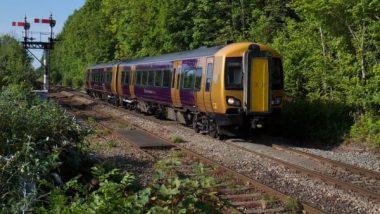
While London Northwestern Railway operates between Liverpool and Birmingham and along the West Coast Main Line to and from London Euston.
West Midlands Trains Managing director, Ian McConnell, said: “We are proud to be one of the fastest-growing train operators in the country with millions of passengers travelling on West Midlands Railway and London Northwestern Railway services every month.
“We’ve introduced more than 100 new trains and upgraded our depots and station facilities. We’re looking forward to opening five brand new stations this year and we’re also rolling out ‘Pay-As-You-Go’ ticketing across 75 locations to enable seamless tap-in, tap-out travel.
“Public ownership is an exciting opportunity to build on this success through a strong culture of collaboration and integration with the wider family of publicly owned operators.”
West Midlands Railway is currently jointly managed with the West Midlands Rail Executive led by Mayor Richard Parker, through a Collaboration Agreement with the DfT which is also being renewed this weekend.
Mr Parker said: “For too long passengers have had to put up with unreliable and overcrowded trains and a confusing ticket system run by companies who put profit before people.
“Now we have a government which is delivering on its pledge to take public ownership and fix our broken railways.”
‘More needs to be done’
Although this is a positive step, Johnbosco Nwogbo at public ownership campaign organisation We Own It, said there was still a long way to go to improve services for passengers.
“Bringing train operating companies like West Midlands Railway into public ownership hardly gets us a quarter of the way to delivering the experience passengers really expect.
“With the company seeing the second highest growth in unreliability across the railway in the year to March 2025, public ownership will be a powerful tool to unite incentives for the benefit of passengers in the region. But it will not be a panacea.
“So much will come down to the broader reforms that the government’s Railways Bill will create, and on that front their approach to that is scattershot.
“On the one hand they want to remove private interests from train operations, but the bill leaves private profiteering intact in train, or rolling stock, ownership.”
How we arrived at this point
Over the past 100-years the structure of railway ownership in the UK has changed since the Railways Act introduced privatisation in 1921. That lasted until 1947 when the Transport Act established the government-owned British Rail, which remained in place until 1993 when privatisation re-emerged.
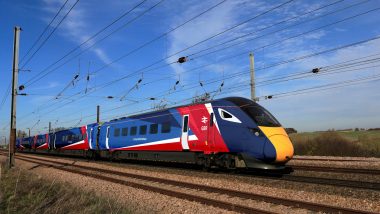
Finally, in 2025 the Railway Bill was introduced bringing about the demise of the current privatisation status, and the creation of Great British Railways.