STRATFORD MP Manuela Perteghella has hit out at the Government and water companies for “purposefully muddying” the truth regarding the scale of water pollution in Stratford.
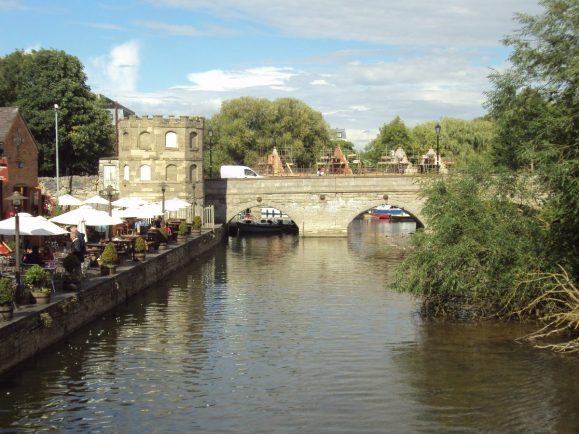
New statistics from the Government reveal that in 2025, sewage was dumped into the River Avon by Severn Trent water for a total of 193 hours on 26 separate occasions.
But the Liberal Democrats have warned that these figures – which only show the duration and number of spills – fail to convey the environmental damage being caused. Under current regulations, water firms are only required to monitor the number and duration of sewage spills, but not the volume of sewage discharged.
Dr Perteghella is calling for water companies to be required to monitor and report the volume of sewage dumped to ensure water companies cannot get away with deliberately obscuring how much they are polluting our waterways with sewage.
She continued “You wouldn’t go into a pub and ask for three and a half seconds of Guinness, so why are we measuring sewage spills in this way?
“In my constituency, water courses are used for kayaking, boating and swimming. I want people to be able to use and connect with our natural waterways, so that they feel a sense of ownership of them, and a sense of responsibility. This will help them to be protected for future generations.
“The people of Stratford-on-Avon deserve to know the true extent of the damage. That’s why I’m calling on the Government to end the Great Sewage Cover-up, and force Severn Trent to record the volume of sewage spilling into our local waterways.”
A spokesperson for Severn Trent said it remained open and transparent about its performance, and data was shared with the Environment Agency and publicly available on its website.
They continued: “The Warwickshire Avon catchment has 628 RNAGs (reasons for not achieving good status), with Severn Trent responsible for 83 of those. A total of 212 are linked to agriculture and land management.
“This makes Severn Trent responsible for 13.2 per cent of the reasons the river is not achieving good ecological status.”