A senior civil servant dismissed by Keir Starmer delivered a highly critical account of decision making at the heart of Downing Street on Tuesday, alleging sustained pressure to approve the appointment of Peter Mandelson as the UK’s ambassador to Washington despite security concerns.
Olly Robbins, formerly a top official at the Foreign Office, told MPs that Number 10 adopted a “dismissive” approach to vetting procedures and pushed for Mandelson’s rapid installation in the role.
He said Mandelson was granted access to Foreign Office premises and to “higher-classification briefings” before formal security clearance had been secured.
Giving more than two hours of detailed evidence to the Foreign Affairs Select Committee, Robbins described an “atmosphere of pressure” that made it extremely difficult to refuse clearance. The situation was compounded, he said, by the fact that Mandelson’s appointment had already been publicly announced.
Robbins confirmed there had also been disagreements among senior officials, including within the Cabinet Office, over whether to release documents related to Mandelson’s vetting through parliamentary mechanisms.
The controversy has intensified political pressure on Prime Minister Keir Starmer. Criticism has emerged from within his own party, with Energy Secretary Ed Miliband stating:
“You’re saying he should never have been appointed and I agree with you.”
Labour MPs have expressed alarm at the decision to appoint Mandelson to such a sensitive diplomatic post, with some warning that the fallout could have serious implications for Starmer’s leadership.
The Intelligence and Security Committee is currently reviewing additional material related to Mandelson’s time in Washington, including a summary of his personal, financial and business background. However, frustration has been reported within the committee over missing key documents, particularly those connected to Robbins’ decision to override a recommendation from UK Security Vetting to deny clearance.
The vetting body had reportedly assigned a “high” level of concern and concluded “clearance denied”. Robbins told MPs he had not seen the full documentation at the time of his decision and was unaware of the detailed assessment.
In his testimony, Robbins said:
“I walked into a situation in which there was already a very, very strong expectation… that he needed to be in post and in America as quickly as humanly possible.”
He added that refusing clearance would have been “very difficult indeed”, explaining:
“The PM’s nominee had been put out there to the public, announced, blessed by the king, agreed by the US government …
“All I can do is agree with the premise that against that backdrop, the Foreign Office saying: ‘OK but sorry, we can’t grant him clearance,’ would have been a very, very difficult problem.”
Robbins said pressure came primarily from the prime minister’s private office, though he suggested that those officials were themselves acting under instruction.
“I think that the private office would only have been [putting on] this pressure themselves if they were under pressure,” he said.
He also revealed that Downing Street had explored finding another senior diplomatic role for a close ally of the prime minister, Matthew Doyle, and had asked him to keep then foreign secretary David Lammy uninformed.
Robbins confirmed he did not inform Starmer or other senior figures that UKSV had recommended denying clearance, instead stating only that clearance had been approved.
Responding to the controversy, Starmer told cabinet colleagues that Robbins was a “man of integrity and professionalism” but had made an “error of judgment”. Downing Street denied claims that it had taken a dismissive approach to vetting.
Following the hearing, committee chair Emily Thornberry said it was justified that Robbins had lost his job.
“I had a great deal of sympathy for him and he’s in a very difficult position,” she said. “I still, though, don’t think it was wrong for him to lose his job. I’m afraid I don’t.”
However, differing views have emerged among Labour MPs. Some argue Robbins was placed in an untenable position, with one describing the situation as an “impossible” one.
The dispute centres on whether proper procedures were followed and whether political urgency overrode national security considerations. Robbins stated that when he took up his role in January 2025, there was already a “very very strong expectation” that Mandelson should take up the post quickly.
He also disclosed that, prior to his appointment, there had been internal debate over whether Mandelson should undergo vetting at all. His predecessor, Philip Barton, had insisted firmly that the process proceed.
Robbins said he was orally briefed that Mandelson was considered a “borderline” case, with vetting officials “leaning towards” refusing clearance. He told MPs he was not shown the formal documentation recommending denial.
The ongoing review by the Intelligence and Security Committee is expected to be written up and conclude shortly. However, the release of related documents may be delayed until after parliament rises ahead of upcoming local elections, meaning the issue is likely to resurface in the coming weeks.
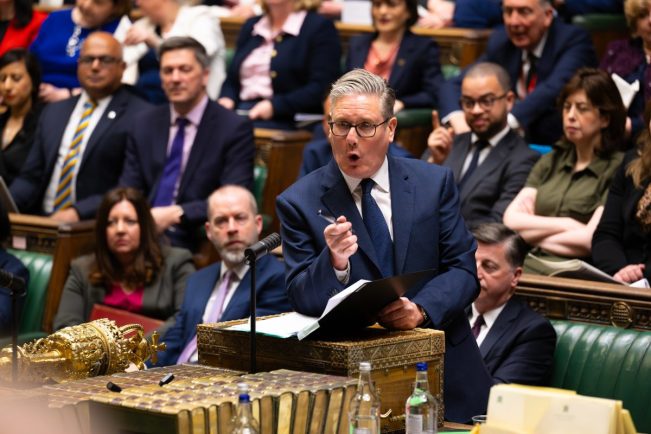
The political fallout is set to continue immediately, with Starmer expected to face fresh scrutiny in the House of Commons at Prime Minister’s Questions at noon today (Wednesday). Opposition leader Kemi Badenoch is likely to challenge him directly on Robbins’ claims of pressure and the handling of Mandelson’s vetting.
The session comes amid growing unease within Labour ranks, where the mood of backbench MPs is expected to be closely watched as the prime minister responds. With further documents due to emerge and parliamentary scrutiny intensifying, the controversy shows little sign of easing.
The episode has triggered a wider political fallout, with further scrutiny expected in parliament as questions continue over how the appointment was handled and what senior figures knew at the time.
Parliament PMQs is every Wednesday starting at approximately 12 noon.
Main Image: https://creativecommons.org/licenses/by-nc-nd/4.0/deed.en