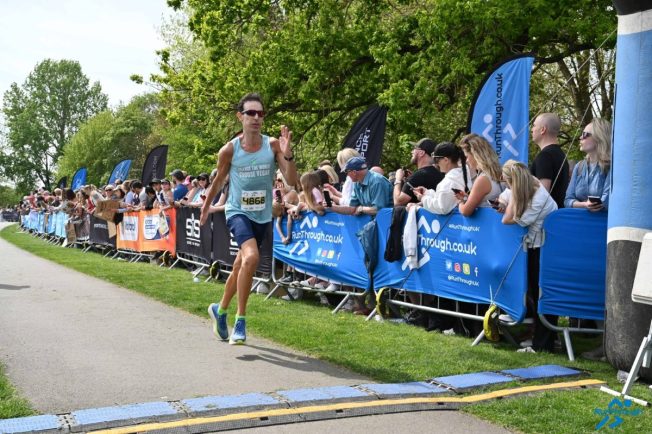
WHILE over 59,000 people were running around the dusty streets of London during the capital’s marathon, almost 1,700 others were enjoying the spectacular spring countryside in Warwickshire.
The weather was perfect for the Shakespeare Marathon – mild and sunny, with high clouds offering a degree of protection, and a gentle breeze at times.
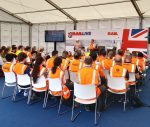
Mixed with nearly 3,000 half marathoners, we started in Stratford and headed out into the countryside for what, for me at least, was a real breath of fresh air. I, along with several other members of Striders of Croydon, a running club in the south London borough, had arrived from the capital the evening before.
Battling a cascade of injuries — a stubbornly sore foot triggered by a knee injury and wounds on hand and other knee, from two falls on training runs, which had also left me with three black toenails, one of which fell out a few days ago – my months of marathon training had come to an abrupt end many weeks earlier. I wasn’t sure I could do this, my first marathon but, reassuringly, my physio had more confidence.
My strategy for this 42K race, if I could do it, was to divide it into quarters, checking in at each 10K to see if all systems were still go. I was not focused on the runners’ obsession with time but of crossing the finish line.
The Shakespeare Marathon, which benefits the Shakespeare Hospice, in Stratford, had a battle of its own – raising £3 million to cover a funding shortfall and keep the vital hospice going.
The 4,700 runners on this balmy Sunday were contributing a chunk through entry fees and sponsorship. “Fundraising events like The Shakespeare Marathon, which we are hoping will bring in £20,000 for the hospice, help keep our nurses on the road supporting people and their families across south Warwickshire,” spokesman Sam Conway told me.
“Like many hospices across the country, we are facing significant financial pressures. Demand for our services continues to rise, while costs — particularly staffing, utilities and clinical delivery — have increased sharply.”
Government funding, said Conway, was insufficient to meet the hospice’s financial needs. “We need to raise £3 million every year and only 12% of our funding comes from the NHS, meaning we rely on charitable income to raise the remaining 88%,” he said.
One person who was both running and raising funds for the hospice was Poppy Ward, a 27-year-old tattoo artist from Evesham in Worcestershire whose grandmother had offered her skin as she honed her craft and whom she was running in honour of. Her grandmother, stricken with cancer, was cared for by the hospice and passed away in April last year.
“My Nan was my absolute world and I’m still lost without her now,” Ward, who has two small children with her husband, Max, told me.
“She was with me during my tattoo journey,” she said, “letting me practice on her as well as having my wedding dress made. She made some little embroidery patches to go on it.
“I wanted to do something that was challenging and that I’ve never done or would ever do as I’ve never ran in my life.
“She went through so, so much and never once complained, and still put everyone else first. So it’s even more reason to do something for her. What’s a little run compared to nine months of her illness?”
Ward met her fundraising target of £600, via a JustGiving page, and said the race was “in ways easier than expected” but that in the “last couple of miles I was really struggling, like my legs just kept cramping and it was just getting harder and harder … I was finding it quite emotional towards the end with the pain and remembering why we were doing it.”
Many people, I saw, found the event challenging. Clubmates started too fast and paid the price later; foot and leg injuries (mine aside) were evident in people stopping and massaging them; and lots walked towards the end.
On a long stretch of rural path, a young woman was doubled over, people surrounding her. I slowed down, and shouted over if they had called someone. “Yes!” a man shouted back, and I kept going, but wondered how an ambulance would get through, not with the people but the narrow dirt path.
Surprisingly, I thought, several people were on phone calls during the race. A man was blaring into his device as I passed and I accelerated to escape the racket. (Later, over post-race drinks at a Stratford pub, I remarked on the phone use, and fellow runner Jacob said he had called his young daughter, “to take my mind off it” as he grappled with a tough part of the race.)
I don’t know if anyone had those new Adidas shoes that allegedly helped propel the London Marathon winner, Sabastian Sawe, to a record time of 1:59. Likely not, given the Shakespeare Marathon was won in an additional 31 minutes, by Matthew Lock of Witney Roadrunners, in 2:30. Chris Kilburn of Mansfield Harriers came first in the half marathon, in 1:10.
As for me, I sprinted to a 3:41 conclusion of the marathon — racing through the finish line and unable to immediately stop. That prompted a woman bearing medals to come running after me and asking if I wanted one. It was a thrilling end to a fantastic event in the glorious English countryside.
William J. Furney