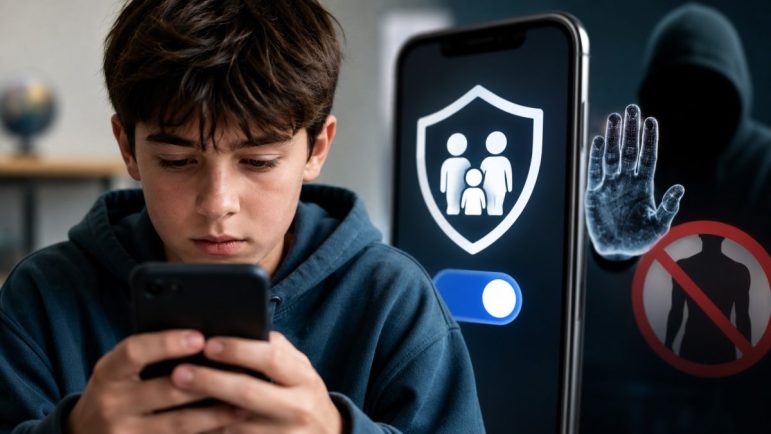
Technology companies could face new legal obligations, fines and even potential criminal sanctions unless they take action to prevent children from accessing, sharing or creating nude images on smartphones and tablets.
The Government has given major technology firms a three-month window to demonstrate that stronger protections can be introduced voluntarily before ministers consider legislation to compel compliance.
Speaking during London Tech Week, Prime Minister Sir Keir Starmer said technology companies should use their expertise to make it significantly harder for under-18s to view or exchange sexually explicit images through devices commonly used by children.
“This is not an impossible challenge. These are some of the most innovative companies in the world and I believe they can solve it,” he said.
The proposals form part of a broader push by ministers to strengthen online safeguards for young people amid growing concerns about online grooming, sextortion and the sharing of self-generated sexual content among children.
Government figures suggest that 91 per cent of online child sexual abuse reports recorded during 2024 involved content created by children themselves. Ministers also say that many young people encounter pornography at an early age, with the average age of first exposure estimated to be around 13.
Under the plans being considered, technology companies would be expected to activate or expand safety features designed to identify and block nude imagery on devices used by children. Any future legislation could apply not only to operating system providers but also to other parts of the technology supply chain, including retailers.
The Government stressed that any restrictions would be aimed at protecting children and would not prevent adults aged 18 and over from accessing legal content after verifying their age.
Sir Keir said the measures could cover both newly purchased devices and those already in use across the United Kingdom.
The announcement adds to a growing body of online safety legislation already introduced in recent years. The Online Safety Act, which is overseen by communications regulator Ofcom, places legal duties on digital platforms to protect users from harmful content.
However, child safety organisations have argued that further action is needed to tackle the growing problem of young people being encouraged, manipulated or pressured into creating and sharing explicit images.
Home Secretary Shabana Mahmood said technology firms should take greater responsibility for preventing such material from reaching children.
“Tech companies have a moral duty to act by making it impossible for children to take, share or view nude images. If they don’t, we will legislate,” she said.
Technology Secretary Liz Kendall called on companies to ensure safety features are enabled automatically for younger users.
“Companies should switch these protections on by default, for every child, on every device. We are giving them three months to show us that they will do the right thing,” she said.
Several major technology firms already offer some child protection tools.
Apple’s Communication Safety feature, available through Child Accounts, warns young users when they attempt to send or receive images containing nudity through services including Messages, AirDrop and FaceTime. The system can also direct children towards help and support resources.
Google said it remained committed to protecting young people online and was working with government and industry partners to explore solutions that balance safety with privacy.
A company spokesperson said:
“We are working constructively with UK partners to find effective, privacy-preserving solutions that deter the spread of harmful content while ensuring a safe digital environment for young people.”
The Government’s latest intervention comes amid wider discussions about children’s use of social media. Ministers are expected to outline further proposals in the coming days following consultation on possible restrictions for under-16s, including limits on access to certain platform features.
Reaction to the announcement has been mixed.
Children’s charities broadly welcomed the move. Andy Burrows, chief executive of the Molly Rose Foundation, described the proposal as “an important step forward for child protection”.
Chris Sherwood, chief executive of the NSPCC, said technology companies must now be held accountable for delivering meaningful improvements.
“Time is up for big tech,” he said.
“Now government must focus on holding them to account to ensure this transformational change for young people’s safety is quickly delivered.”
Privacy and civil liberties campaigners, however, warned that stronger age verification requirements could have wider implications for internet users.
Silkie Carlo, director of Big Brother Watch, argued that the plans risked expanding identity checks online.
“Protecting children online is vital, but these are outrageous plans that will fail to address the underlying causes of online harm,” she said.
“Put simply, the Labour government is threatening ID checks for the internet. No-one in a democracy should need to show their passport just to get online.”
The Open Rights Group also raised concerns about the potential expansion of age-verification systems and the collection of personal data.
The issue has already generated debate within Labour. Earlier this year, Labour MP Jess Phillips stepped down as safeguarding minister after criticising the pace at which the Government was prepared to threaten legislative action on the sharing of nude images by children.
Ministers now appear determined to increase pressure on the technology sector, arguing that the tools needed to improve child safety already exist and should be deployed more widely across devices used by young people.