Andy Burnham is expected to unveil plans for new oil and gas drilling in the North Sea as one of his first acts as prime minister, according to reporting by the BBC.
The announcement is expected once Burnham formally takes charge of the government on Monday.
The move would represent a significant break from the position Labour took into the 2024 general election, when the party’s manifesto ruled out issuing new drilling licences while committing to honour those already granted. Burnham has previously said he intends to govern in line with that manifesto, making any shift on North Sea policy a notable early test of his approach.
Rosebank and Jackdaw at the centre of the row
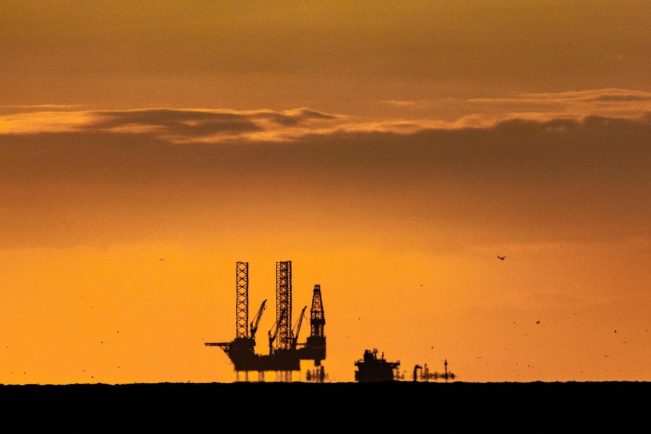
Two North Sea fields, Rosebank and Jackdaw, sit at the heart of the dispute. Regulators approved both under the Conservative government, Rosebank in 2022 and Jackdaw in 2023, but the approvals were quashed in 2025 following a legal challenge. According to the BBC, public consultations on both projects were launched only days before Burnham’s expected handover, meaning a formal decision may not be possible until those consultations conclude.
The BBC also reports that Burnham’s plans, alongside the drilling announcement, are set to include bringing water and energy companies under greater public control and launching a new council house building programme, as he seeks to mark an early departure from his predecessor’s agenda.
Industry and political pressure to change course
Support for expanding North Sea extraction has been building from several directions. Shortly before the Labour leadership nominations closed, oil and gas companies and trade unions wrote to Burnham and other Labour MPs urging them to back the North Sea industry, framing continued support as a signal that Britain remains committed to domestic production and manufacturing, and to the workers and regions that have relied on the sector for generations, the BBC reported.
Offshore Energies UK, the industry’s trade body, has separately told the Scotsman that Burnham faces a “critical moment” in the energy transition and has pressed him to support both oil and gas and renewables together. The organisation’s energy policy director said the sector had endured a difficult period marked by job losses and a reduced domestic supply, blaming what he described as a difficult fiscal and regulatory environment.
Kemi Badenoch, the Conservative leader, has gone further, describing the current restrictions on the sector as an “anti-oil and gas, anti-British” policy that she has pledged to reverse should she become prime minister. She has accused Labour of treating the North Sea as a relic of the past, while David Whitehouse, chief executive of Offshore Energies UK, has argued the UK should be producing its own oil and gas.
US President Donald Trump has also repeatedly criticised Labour’s approach, arguing that Britain is needlessly restricting its own energy supplies, according to reporting by Time.
Within the Labour Party itself, some MPs have pushed for a more permissive approach, warning that moving away from oil and gas too quickly risks jobs and higher energy bills. Others have defended the existing manifesto commitment, arguing that expanding renewable energy is essential to energy security and to limiting the impact of climate change.
Current Energy Secretary Ed Miliband, tipped for a senior role in Burnham’s cabinet, has been among the strongest defenders of Labour’s original position, having previously called the Rosebank licence “climate vandalism.” Green Party co-leader Zack Polanski has also criticised Burnham’s more open stance on fossil fuels, arguing the case for ending North Sea drilling for good remains unanswered.
How Burnham becomes prime minister
Burnham’s path to Downing Street began after Sir Keir Starmer announced his resignation as prime minister and Labour leader following weeks of pressure from within his own party. Starmer said he had informed King Charles of his decision but agreed to remain in post as a caretaker until a successor was chosen, with nominations for the Labour leadership opening shortly afterwards.
Burnham, who had left his role as Mayor of Greater Manchester to contest and win the Makerfield by-election, entered the contest as the clear frontrunner. He went on to secure the backing of 379 Labour MPs as well as all 11 trade unions affiliated with the party, allowing him to be confirmed as Labour’s new leader without a contested vote.
As leader of the party best placed to command a majority in the House of Commons, Burnham is now expected to be formally appointed prime minister by King Charles, in keeping with the UK’s usual constitutional process, once Starmer tenders his resignation to the King.
That handover is expected to take place on Monday, at which point Burnham will succeed Starmer at 10 Downing Street. Burnham has said he is finalising the make-up of his top cabinet posts ahead of taking office.