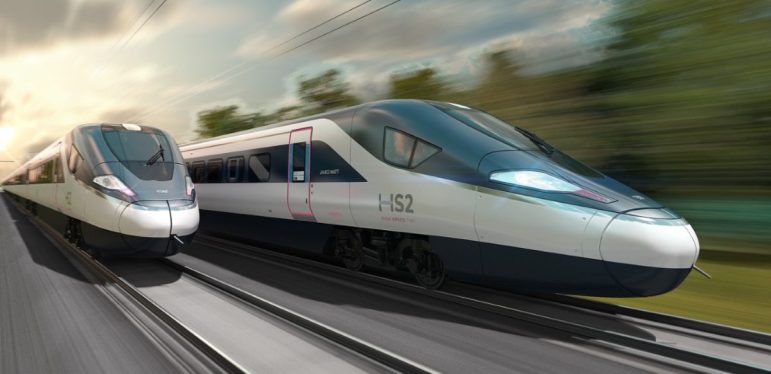
Britain’s flagship high-speed rail project HS2 is facing another major reset after ministers confirmed the railway could cost more than £100 billion and may not fully open until the early 2040s, nearly two decades later than first envisaged.
Transport Secretary Heidi Alexander told the House of Commons that the total projected cost of HS2 now stands between £87.7 billion and £102.7 billion in 2025 prices, while the first services between Old Oak Common in west London and Birmingham may not begin until between 2036 and 2039.
The full route from London Euston to Handsacre Junction in Staffordshire, where HS2 trains will join the West Coast Main Line, is not expected to be completed until between 2040 and 2043.
The revised figures represent a dramatic increase from the original estimate of £32.7 billion in 2011 prices when the scheme was first approved. As of March 2026, £44.2 billion has already been spent.
Alexander described the project as a “massively overspent folly” and said taxpayers and communities had been “swindled” by years of poor planning and ineffective oversight. She told MPs:
“If it seems like an obscene increase in time and costs, it is because it is.”
The Government also confirmed that the maximum operating speed of HS2 trains will be reduced from the originally planned 223mph to around 200mph. Ministers said the change would align Britain’s railway with high-speed services in Europe and Japan, potentially saving up to £2.5 billion and allowing part of the project to open earlier.
The latest reset follows a review led by Sir Stephen Lovegrove, the former national security adviser, which criticised what it described as “gold plating” within the scheme. The review suggested that decisions to pursue some of the world’s fastest trains added unnecessary complexity and expense.
The renewed scrutiny of HS2 has reignited wider questions about why major infrastructure projects in Britain frequently experience delays, spiralling costs and prolonged disputes compared with comparable schemes overseas.
Industry experts have long argued that Britain’s planning system, legal processes and fragmented delivery structures add significant costs to large-scale construction projects. Major developments can face years of environmental assessments, judicial reviews, public consultations and procurement disputes before work begins.
The UK’s National Infrastructure Commission has previously warned that uncertainty and repeated redesigns contribute heavily to rising costs. Frequent political intervention, changing specifications and stop-start funding arrangements have also been identified as major factors.
By contrast, countries such as France, Spain and Japan have delivered extensive high-speed rail networks more rapidly and at lower cost per mile. Spain has built more than 2,500 miles of high-speed railway since the 1990s, while Japan’s Shinkansen network has operated for decades with a reputation for punctuality and engineering efficiency.
Outside rail, international comparisons are often drawn with major infrastructure schemes in Asia and the Middle East. China has constructed the world’s largest high-speed rail network in little more than 15 years, while projects such as the Hong Kong–Zhuhai–Macau Bridge and Dubai’s metro system were delivered on accelerated timescales.
Critics of the UK system argue that British projects are increasingly burdened by overlapping regulatory requirements, planning objections and rising consultancy costs. Business groups and infrastructure specialists have repeatedly warned that excessive bureaucracy can discourage investment and slow delivery.
Some construction leaders have also raised concerns about industrial relations and restrictive working practices within parts of the sector. Large infrastructure projects in Britain often involve multiple contractors, subcontractors and regulatory bodies, creating layers of administration that can affect productivity and decision-making.
However, transport analysts caution that international comparisons are not always straightforward. Land acquisition rules, labour costs, environmental standards and democratic planning requirements differ significantly between countries.
The Government maintains that completing HS2 remains the least costly option despite the revised budget. Alexander told MPs that cancelling the railway could cost “almost as much to cancel the line as it would to finish it, while delivering none of the benefits”.
Shadow transport minister Jerome Mayhew acknowledged that the project’s early years had been “beset with delay and cost overruns” and called for “consequential legislative changes” to prevent similar problems on future infrastructure schemes.
HS2 Ltd chief executive Mark Wild said the latest reset was “the only way to regain control of the project” and claimed productivity had improved over the past year.
The project was originally designed to connect London with Birmingham, Manchester and Leeds. The northern sections were later cancelled by previous governments in an attempt to control costs, leaving the line focused primarily on the London to Birmingham corridor.
Even in its reduced form, HS2 remains one of the largest and most expensive infrastructure projects in British history.
What do you think? Has Britain become too slow and expensive at delivering major infrastructure projects, or are stricter planning and environmental safeguards a price worth paying?