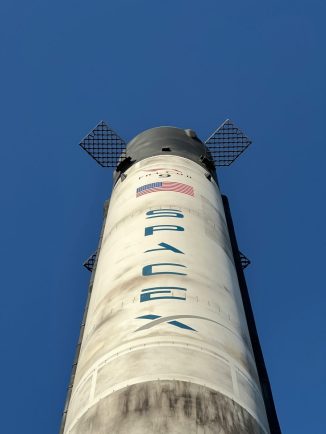
SpaceX’s stock cost narrative has become one of the most closely followed themes in private market investing. Although the company is not publicly listed, interest in the SpaceX stock continues to rise due to strong secondary market activity and rapid valuation growth. Investors are closely tracking the SpaceX stock price through private share transactions, where limited supply and high demand continue to influence pricing trends.
Expectations of a future public listing have further strengthened attention around SpaceX’s stock cost, making it a key focus of forward-looking market sentiment. Overall, SpaceX’s stock cost discussion is driven more by anticipation and private market dynamics than traditional stock exchange trading activity.
Secondary Market Price Movement
SpaceX’s stock cost in secondary markets has shown consistent upward movement driven by strong demand for limited private shares. Reported secondary trading levels have crossed the 600 dollar mark per share, with recent estimates placing SpaceX’s stock price around 604.39 dollars per share and later increasing to approximately 614.68 dollars per share.
This steady rise in SpaceX’s stock price reflects strong investor interest in gaining exposure before a public listing. The movement is not based on open market trading but on private transactions where supply is limited, and demand continues to increase.
Valuation Growth and Market Repricing
A major driver behind SpaceX’s stock price trends is the rapid expansion in the company’s valuation. The valuation has grown significantly from around 180 billion dollars in mid-2024 to over 1 trillion dollars in early 2026. This sharp increase has reshaped how investors view SpaceX’s stock price potential in both private and future public markets.
Current SpaceX’s stock price expectations are influenced by projections suggesting valuation levels could reach between 1.5 trillion and 1.75 trillion dollars when the company enters public markets. This anticipated growth reflects strong confidence in long-term business scalability and infrastructure dominance.
IPO Expectations and Market Sentiment
Market expectations surrounding SpaceX’s stock price are strongly tied to the anticipation of a future public listing. Investor discussions suggest that the company is moving toward an IPO phase that could become one of the largest in financial history, with potential capital raising estimated between 50 billion and 75 billion dollars.
As a result, SpaceX’s stock price in secondary markets increasingly reflects future growth expectations rather than current operational valuation alone. The pricing trend is heavily influenced by projected demand for shares once public trading begins.
Key Growth Drivers Behind SpaceX Stock Price
Satellite Internet Expansion
A significant factor influencing SpaceX’s stock price is the growth of its satellite internet division. This segment is projected to generate approximately 11.8 billion dollars in revenue for 2025, accounting for nearly 67 percent of total revenue. The rapid expansion of global subscribers, expected to exceed 16 million, directly supports upward SpaceX stock price momentum.
Global Launch Market Leadership
Another major contributor to SpaceX’s stock price strength is its dominant position in the global launch industry. With more than 165 missions completed using reusable rocket systems in a single year, the company has significantly reduced launch costs by approximately 65 percent. This operational efficiency strengthens long-term SpaceX’s stock price expectations by improving scalability and profitability.
Advanced Space Infrastructure Development
The future of SpaceX’s stock price outlook is also connected to next-generation space systems. The development of advanced reusable rockets is expected to play a key role in reducing costs further and enabling large-scale space infrastructure projects such as orbital data systems. These advancements are central to long-term SpaceX’s stock price growth projections.
Strategic Expansion and Technology Integration
Recent developments impacting SpaceX’s stock price include the integration of artificial intelligence capabilities through an all-stock acquisition of an AI-focused company. This move combines space infrastructure with artificial intelligence systems, expanding the company’s technological scope.
While this integration strengthens long-term innovation potential, it also adds complexity to business operations. This dual impact is reflected in SpaceX’s stock price analysis, where growth potential is balanced against operational diversification risks.
Risk Factors Influencing SpaceX Stock Cost
Despite strong growth projections, SpaceX’s stock price outlook carries several important risks.
One major concern is valuation pressure. With expectations already exceeding 1 trillion dollars and moving toward higher ranges, SpaceX’s stock price depends heavily on continuous rapid revenue expansion, particularly from satellite internet services.
Another factor is potential volatility driven by leadership decisions and operational changes. The SpaceX stock cost has the potential to experience significant fluctuations based on strategic announcements and project execution milestones.
Regulatory approvals also remain an important factor. Launch operations depend on regulatory clearances, which can impact timelines and indirectly influence SpaceX’s stock price expectations.
Additionally, integration of new technology segments introduces operational complexity that could affect efficiency and long-term SpaceX stock cost stability.
Long Term Market Outlook 2026 to 2030
The long-term SpaceX stock cost outlook remains strongly growth-oriented based on current market projections. Satellite internet services are expected to remain the primary revenue driver, supported by expanding global connectivity demand.
Analyst-based projections suggest that SpaceX’s stock price potential is tied to enterprise valuation estimates reaching approximately 2.5 trillion dollars by 2030, with optimistic scenarios extending beyond 3 trillion dollars. These projections assume continued dominance in launch services, successful scaling of satellite networks, and advancement in reusable space technology.
SpaceX’s stock price trajectory over this period will likely depend on three core factors: satellite internet expansion, cost-efficient launch systems, and large-scale space infrastructure deployment.
Conclusion
The SpaceX stock price story is one of the most closely followed trends in private markets. Secondary market prices have already crossed 600 dollars per share, while valuations have moved beyond the trillion-dollar level, keeping investor sentiment highly optimistic about the SpaceX stock cost.
The outlook for SpaceX’s stock price is supported by satellite internet expansion, global launch dominance, and advanced space technology development. However, high valuation levels, operational complexity, and regulatory challenges remain key risks that could impact future SpaceX stock cost performance and overall market expectations.
This is a submitted article