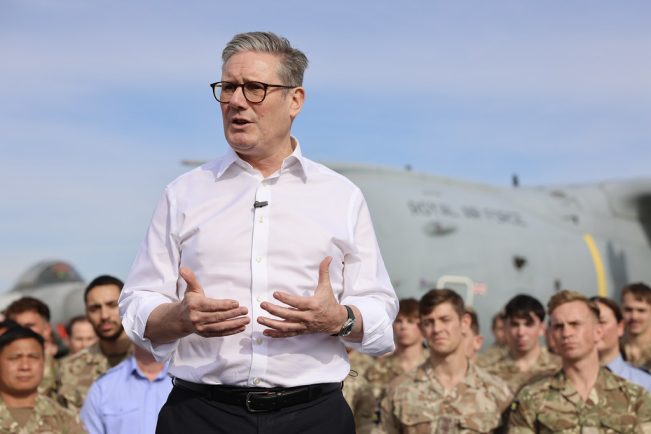
Keir Starmer is travelling to the Gulf today (Wednesday) to support a ceasefire between the United States and Iran.
Downing Street says the Prime Minister will meet leaders from countries in the region and set out the UK’s backing for the ceasefire, as well as pushing for a longer-term diplomatic agreement.
He is also expected to hold talks on keeping the Strait of Hormuz open, after recent disruption to the key shipping route sent global energy prices sharply higher.
Sir Keir welcomed the ceasefire, which was announced by Donald Trump, saying it would bring “a moment of relief to the world” and that the UK “must do all we can” to help it hold.
However, ministers have made clear that Britain is not directly involved in negotiating the agreement. Sarah Jones, the crime and policing minister, said the UK was “not playing a role in peace negotiations”, but was working with allies in a defensive capacity.
The ceasefire, brokered with support from Pakistan, followed a period of heightened tension after Iran blocked the Strait of Hormuz, a route used to transport around 20 per cent of the world’s oil and gas. Prices have since fallen following the announcement.
The Prime Minister’s trip also comes at a time of strained relations with Washington. President Trump has publicly criticised Sir Keir in recent days, suggesting the UK has “a long way to go” to repair ties and comparing him to Neville Chamberlain.
James Cleverly said the US president “does not respect” the Prime Minister, claiming the UK’s position had been weakened during the crisis.
Alongside the diplomatic questions, the cost of the visit is likely to draw attention. Government figures show eight overseas trips by the Prime Minister in the final three months of 2025 cost £1.41 million, covering around 44,400 miles, an average of £31.70 per mile.
Based on those figures, a return flight of about 6,200 miles to Saudi Arabia would cost close to £200,000, with any additional stops, including a possible visit to Qatar, pushing the total higher.
While supporters say the trip is part of Britain’s responsibility to support stability and protect vital trade routes, critics argue it risks looking like an expensive visit with limited practical impact, particularly given the UK’s lack of direct involvement in securing the ceasefire.
Sir Keir is also expected to meet British troops stationed in the region during the visit.
The trip underlines the challenge facing the Prime Minister, balancing claims of international leadership with the reality of a more limited role, and doing so under increasing scrutiny over the cost to taxpayers.
Main Image: https://creativecommons.org/licenses/by-nc-nd/2.0/