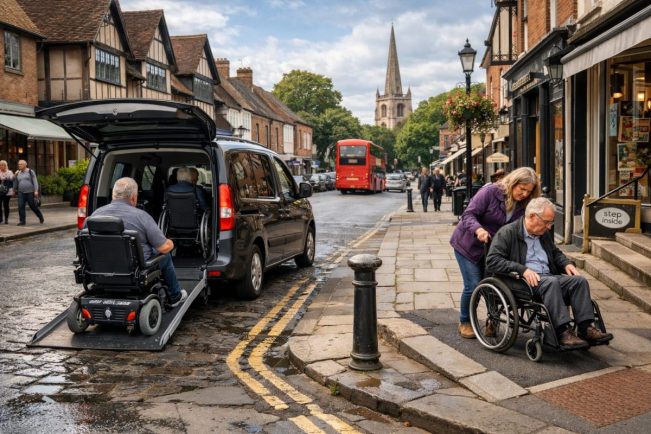
Getting around town becomes harder when mobility changes.
For many people in Stratford and across the UK, a simple trip to the shops or a visit to family can feel impossible without the right transport.
Wheelchairs offer independence indoors, but stepping outside often means relying on others or struggling with vehicles that were not built with accessibility in mind.
Wheelchair accessible vehicles have changed how many people manage everyday travel. These adapted cars and vans allow wheelchair users to travel as drivers or passengers without transferring from their chairs. Rear-entry and side-entry conversions, lowered floors and ramps turn standard vehicles into practical options for daily journeys. Many families are unsure where to begin when exploring these options. Understanding the safety standards that apply to vehicle conversions can make the process clearer.
The UK market for wheelchair accessible vehicles has expanded as awareness increases and more wheelchair accessible vehicles for sale appear across specialist providers. Regulations have also developed to ensure that adapted vehicles meet safety requirements. Understanding the differences between conversion types, identifying the relevant certifications and considering financing options can make the process easier. For Stratford residents facing mobility challenges, the right vehicle can help restore independence on local roads.
When Stratford’s Pavements and Kerbs Become Barriers
Stratford-upon-Avon’s historic town centre presents specific mobility difficulties. Uneven pavements near the Shakespeare properties, narrow footpaths along Waterside and limited dropped kerbs in older residential areas all add up. What appears to be a pleasant walk to many residents can feel far more difficult for wheelchair users. Local accessibility resources, including the accessible Stratford-upon-Avon town centre map, outline parking areas, accessible toilets and routes designed to support visitors and residents with mobility needs.
These barriers affect daily routines in practical ways. Reaching shops on Bridge Street, attending performances at the RSC or getting to a GP surgery can become complicated without reliable accessible transport. In recent years, more people in Warwickshire have sought mobility support, reflecting a growing local need for accessible solutions.
Narrow pavement sections or missing kerbs create everyday hazards for residents who depend on wheelchairs. Certain areas, including High Street or the route towards Bancroft Gardens, sometimes have insufficient dropped kerbs or tight corners. These conditions may force wheelchair users to detour or move onto the road temporarily. Seasonal weather can also worsen surface conditions, increasing the difficulty of moving around the town centre.
Common Mobility Barriers in Stratford
One example involves a Stratford resident who began using a wheelchair following a stroke. Their family’s standard vehicle no longer supported independent travel. After seeking local advice, they began researching Allied Mobility wheelchair accessible vehicles designed for wheelchair users and built to meet recognised UK safety standards.
Situations like this are increasingly common for Stratford residents whose mobility needs change over time. Vehicle adaptation can become an important step in maintaining independence and continuing normal daily activities.
Tasks that once felt simple, such as visiting relatives, attending medical appointments or going shopping in town, often require transport that supports wheelchair access safely and comfortably. When standard vehicles no longer meet these needs, adapted vehicles become an important option for maintaining independence and continuing normal activities within the community.
How Vehicle Conversions Restore Street-Level Independence
Switching from public transport or taxis to a private wheelchair accessible vehicle often gives families greater control over travel plans. For Stratford households, a WAV becomes more than transport. It supports routine journeys, medical appointments and family outings without complicated arrangements. Reliable access to an adapted vehicle allows wheelchair users to move around town with greater confidence and less dependence on external assistance.
Wheelchair accessible vehicles remove the need to transfer from a wheelchair into a standard seat. This reduces risks during entry and exit and supports greater comfort during travel. Two main conversion layouts are common in the UK market. Rear-entry conversions keep the front passenger seat available and often suit families travelling with several passengers. Side-entry conversions are more suitable for users who park regularly on town streets, as they require less deployment space behind the vehicle.
Lowered floors create additional headroom without significantly altering the vehicle’s external height. Ramps may operate manually or automatically. Both options are designed to meet UK requirements for structural integrity and wheelchair accessible vehicle safety standards, which regulate restraint systems, vehicle stability and safe wheelchair transport.
Rear-Entry Versus Side-Entry Configurations
Rear-entry conversions often work well for Stratford households using residential driveways or transporting multiple passengers. They allow families to retain standard seating arrangements while accommodating a wheelchair user. Side-entry conversions may suit users who rely on town centre parking, as entry from the side of the vehicle can be easier in tighter spaces. Understanding vehicle modifications for people with disabilities can also help families compare how different conversion layouts support accessibility and safe wheelchair entry.
Families often evaluate several practical factors before choosing a configuration. Parking space, driveway access and the number of passengers travelling regularly all influence which layout works best. Testing entry and exit with the wheelchair that will be used daily can also help identify which system offers the safest and most comfortable access.
UK Regulations That Protect Wheelchair Vehicle Users
Ensuring that a converted vehicle meets current UK safety standards is essential. Buyers should confirm that converters follow recognised engineering guidelines and provide documentation demonstrating compliance with relevant regulations. These requirements typically relate to ramp load capacity, restraint systems and the structural integrity of the adapted vehicle.
Government consultations and regulatory updates continue to influence how powered mobility devices and adapted vehicles are integrated into UK transport systems. Keeping informed about regulatory developments can help buyers make confident decisions when selecting a vehicle that meets current standards.
Practical Considerations for Stratford Residents
Vehicle size can affect parking in Stratford. Compact conversions based on models such as the Peugeot Rifter or Citroën Berlingo fit more easily in standard town centre spaces. Larger vehicles based on vans such as the VW Transporter may require a dedicated disabled parking bay.
Running costs also vary depending on the vehicle type. Electric conversions may reduce fuel expenses compared with petrol or diesel vehicles, although charging infrastructure at home may be required. Some local councils provide support schemes for residents installing EV charging points, and government programmes such as electric vehicle chargepoint grants for landlords help offset installation costs for residential properties.
Insurance for adapted vehicles should cover both the base vehicle and any conversion equipment. Specialist policies often take the cost of ramps and restraint systems into account. Providers may request documentation confirming that the conversion meets recognised safety standards before issuing cover.
Insurance and Safety Checks for WAV Owners
Regular safety checks are often recommended for specialist equipment. Maintenance inspections help ensure that ramps, restraints and lifting systems continue to operate correctly. For Stratford families who depend on accessible transport, reliable maintenance support can help prevent unexpected disruption.
Specialist garages or mobility adaptation providers often carry out inspections for wheelchair restraint systems, ramp mechanisms and floor anchoring points. These checks help confirm that safety equipment remains secure during everyday travel. Keeping maintenance records can also be useful when renewing insurance or arranging future servicing for an adapted vehicle.
Financing Pathways and Local Funding Support
Several leasing and financing options exist for wheelchair accessible vehicles in the UK. Advance payments usually depend on the vehicle model and conversion type. Insurance and servicing are sometimes included within leasing agreements, although the exact coverage should always be verified with the provider. Recent policy discussions, including the Motability DWP update for 2026, also highlight how tax and leasing rules may influence future costs for some mobility vehicle users.
Local councils may also offer grants that help fund mobility adaptations after an assessment. Residents can obtain details about available support through their council or the official government website. In some cases, eligible benefits may also contribute towards the cost of financing or purchasing an adapted vehicle.
Accessible transport plays an important role in helping Stratford residents remain active and independent as mobility needs change. By understanding conversion options, safety standards and available funding pathways, families can plan transport that supports everyday routines. With the right vehicle and preparation, travelling around Stratford can remain practical, safe and dependable.